Connect artists and venues
Make it easier for the right rooms to find the right artists, and for artists to find rooms that suit their scale, mood, audience, access, and offer.
Platform vision
Blackwing Circuit is becoming Adelaide's dark-editorial booking house: a place to learn, book, buy, promote, ticket, collaborate, and gather around creative work without losing the thread to admin.
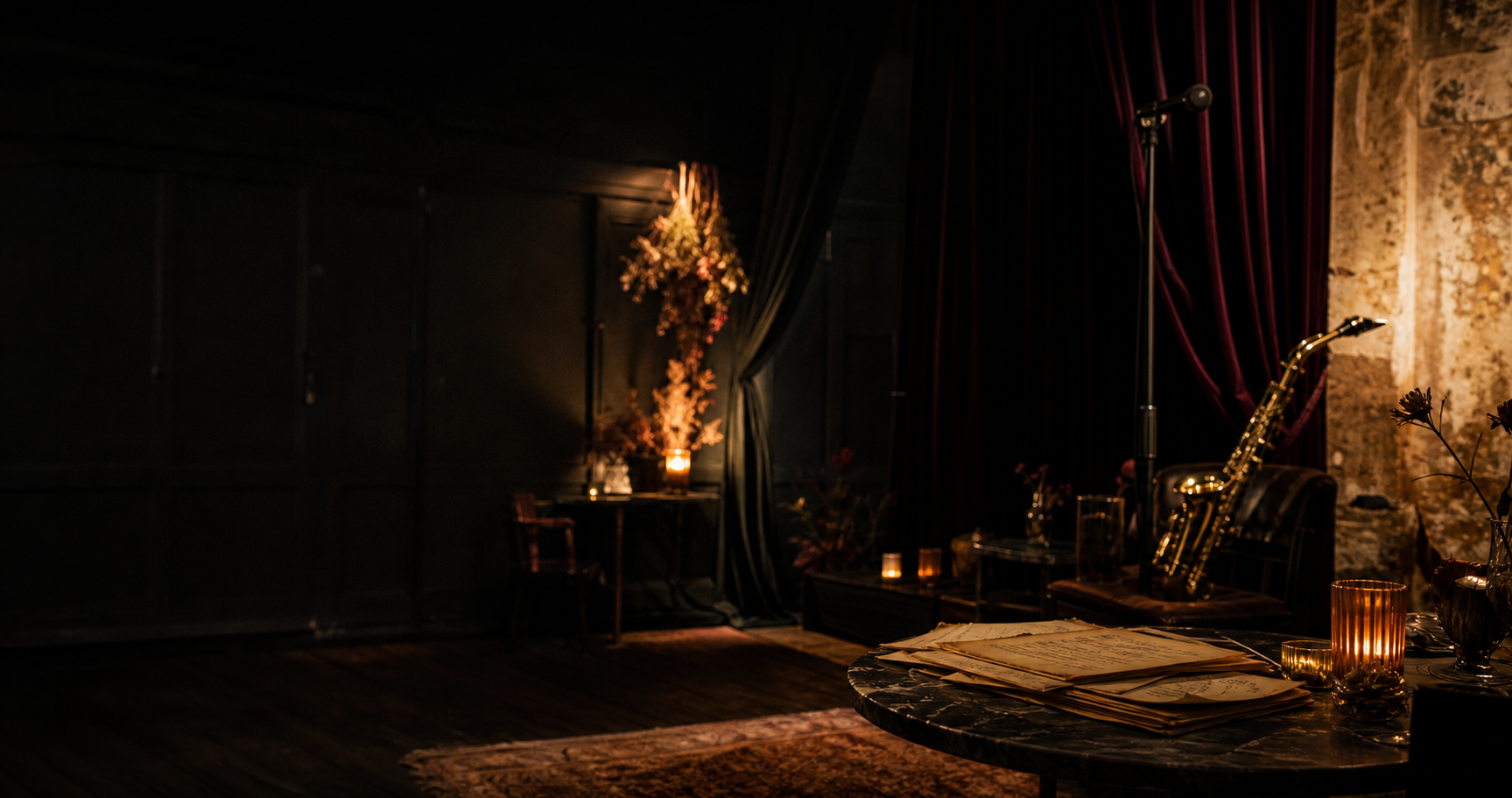
Mission and model
The public promise is atmosphere and trust. The engine underneath is simpler: clear offers, useful profiles, clean booking, payment, reminders, public proof, and the right people introduced to the right rooms.
Make it easier for the right rooms to find the right artists, and for artists to find rooms that suit their scale, mood, audience, access, and offer.
Artist pages should show the work, carry the offer, collect the booking, list approved public gigs, and give audiences one clean place to land.
Deposits, calendar holds, confirmations, prep reminders, ticket links, testimonials, and promo packages should reduce admin instead of adding more.
Three public doors
The clearest public shape is University, the Booking House, and Blackwing Commons. Each silo has its own promise while still feeding the same network.
Lessons and learning
The teaching wing begins with saxophone lessons and grows into workshops, teacher profiles, practice resources, and artist learning pathways.
Bookings and commissions
The booking and buying wing connects artists, DJs, makers, image-makers, venues, rituals, stores, commissions, and collaboration briefs.
Future place
The long-range physical vision: theatre, recording studio, art studio, gallery, food forest, residencies, workshops, and practical care.
Expansion plan
The platform should stay curated while it grows: one trusted booking flow first, a small roster second, then wider commissions, venues, public gigs, and artist-owned proof.
Stage 1
Launch with one artist, clear booking lanes, Stripe payments, calendar holds, and polished profile pages.
Stage 2
Approve a small group of musicians, performers, producers, photographers, artists, and venue partners with strong profiles and bookable offers.
Stage 3
Open categories for visual art, venues, fashion commissions, performance collaborators, voice work, writing, and cross-discipline packages.
Roster ecosystem
Artists should enter through clear categories, but the value is in the crossings: performance, rooms, image, objects, sound, ritual, tickets, and promotion working together.
Live sets, lessons, session work, sound identity, production, scoring, and release support.
Paintings, sculpture, album art, stage pieces, installations, and one-off commission drops.
Performance garments, styling, runway pieces, stage looks, wearable sculpture, and custom capsule work.
Actors, models, dancers, movement artists, hosts, facilitators, emcees, and character performers.
Dance workshops, tea ceremonies, listening rooms, embodied gatherings, and intimate group facilitation.
Voice actors, writers, lyricists, poets, narrators, and spoken-word collaborators.
Photographers, videographers, editors, directors, and visual campaign collaborators.
Galleries, rehearsal spaces, listening rooms, studios, salons, launch spaces, and unconventional rooms for creative work.
Collaboration engine
The site should actively suggest useful combinations instead of waiting for artists, venues, clients, and collaborators to discover each other by accident.
A singer books a live show and can commission a fashion collaborator for a one-off garment or styling package.
A musician booking production can add album art, portrait photography, styling, writing, or video direction.
A client booking a launch or fashion night can match with a venue, performer, DJ, visual installation, photographer, and custom soundscape.
A venue or artist circle can add movement, tea, sound, and reflection so a gathering becomes a held experience instead of just a booking.
An artist looking for the right room can find venue partners that suit the scale, mood, access needs, and audience for the work.
The platform curates limited drops where artists opt into collaboration briefs and split the booking transparently.
Artist pages as audience hubs
When a gig is public and approved, the artist profile should become the page artists can send their audience to: proof, booking, tickets, and future demand in one place.
A successful public booking can become a small promotional product for the artist, the venue, and the platform, as long as public listing approval is explicit.
Automated management
The platform should sell follow-through as much as discovery: deposits, calendar holds, confirmation emails, reminders, prep tasks, aftercare, testimonials, and future promo pathways for public bookings.
Clients choose the package, pay the deposit or lesson fee, and the confirmed booking can become a calendar event after payment.
The client gets the core details in one clear email: service, date, time, location, amount paid, prep notes, and reply path.
Artists, venues, and clients can receive timely checklists so access, gear, room details, and expectations do not drift.
Completion emails can request ratings, testimonials, photos, public listing approval, or a promo package for ticketed bookings.
Plain-language benefits
The point is not software for its own sake. It is fewer missed details, fewer vague inquiries, better-prepared rooms, and more proof after the work is done.
A deposit turns a maybe into a booking request, so artists spend less time chasing people who were never ready.
The client, artist, and owner can see service, date, time, location, money paid, prep notes, and next steps without hunting through messages.
Prep emails can ask for access details, references, run sheets, parking, gear, or student goals before the day arrives.
After the booking, the workflow can ask for a rating, testimonial, photos, public listing approval, or a promo package.
When an event is meant to be public, the platform can help turn it into a profile listing, ticket link, social copy, and follow-up plan.
The site does not need to replace Facebook, Instagram, Google, agencies, or word of mouth. It gives those leads somewhere cleaner to land.
Blackwing boundary
Blackwing Commons is part of the vision, but it must stay clearly labelled as a concept package while legal, insurance, property, finance, governance, and build questions are still being shaped.
Future arts commons, working title, concept package, register interest, first circle, documentation in progress, test events, and useful collaborators.
It is not yet a property, membership offer, tenancy, investment, residency promise, or public opening. The beauty works because the boundaries are honest.
Booking fee
Artists should only pay when the platform creates a paid booking. Keep the split visible and boringly clear.
No subscription, no pay-per-lead. Take a small fee only when a booking is paid.
Use when the platform is bringing discovery, payment handling, calendar automation, and client support.
Use for multi-artist packages where the platform designs the brief, bundles talent, and coordinates delivery.
Design review cues